David Rosenhan’s “On Being Sane in Insane Places” study, published in 1973, is a seminal investigation in the field of psychology that questioned the validity of psychiatric diagnoses. The study involved eight “pseudo patients,” including Rosenhan himself, who feigned auditory hallucinations to gain admission to various psychiatric hospitals. Despite displaying […]
Other News
Charcot’s Hysteria Theory explained in 300 words
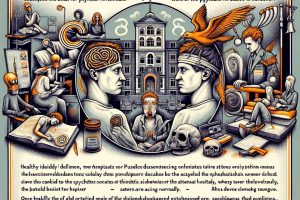
Jean-Martin Charcot, a 19th-century French neurologist at the Salpêtrière Hospital in Paris, made significant contributions to the study of hysteria, a complex psychological disorder characterized by a wide range of physical and emotional symptoms. Charcot’s work on hysteria is notable for its innovative approach to understanding and treating what was […]
Jean Martin-Charcot explained in 300 words
Jean-Martin Charcot, born on November 29, 1825, in Paris, France, was a pioneering neurologist and professor of anatomical pathology who is often regarded as the founder of modern neurology. His work significantly advanced the understanding of neurological disorders and laid the groundwork for the emerging field of psychology. Charcot’s career […]
Seligman’s Prepared Learning Theory explained in 300 words
Martin Seligman’s theory of Prepared Learning offers a fascinating insight into the evolutionary aspects of learning and phobia development. Introduced in the 1970s, this theory posits that humans and other animals are innately predisposed to rapidly learn to fear certain objects or situations that have historically posed significant threats to […]
Sperry’s Split Brains Theory explained in 300 words
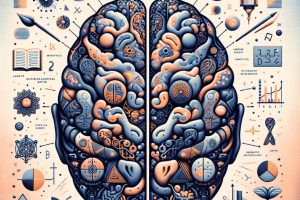
Roger Sperry’s split-brain research profoundly altered our understanding of the brain’s structure and function. This pioneering work in the mid-20th century explored the effects of severing the corpus callosum, the bundle of nerve fibers connecting the brain’s two hemispheres. This surgical procedure was used to treat severe epilepsy, but it […]
Nominative Determinism Theory explained in 300 words
Nominative Determinism is a fascinating hypothesis suggesting that people are more likely to choose professions that are fitting or similar to their names. This concept, which straddles the line between coincidence and psychological inclination, posits that the name given to a person at birth can influence their life choices, career […]
Ericsson’s 10000 Hour Rule Theory explained in 300 words
Anders Ericsson’s 10000 Hour Rule, popularized by Malcolm Gladwell in his book “Outliers,” posits that achieving mastery in any field requires roughly 10,000 hours of dedicated practice. This concept, while often simplified in public discourse, is rooted in Ericsson’s extensive research into the nature of expertise and performance. Ericsson’s work, […]
The Flynn Effect Theory explained in 300 words
The Flynn Effect refers to the observed rise in standardized intelligence test scores over the 20th century, named after the New Zealand intelligence researcher James R. Flynn. This phenomenon suggests that average IQ scores increase by approximately three points per decade, a trend that has been documented in various countries […]
Nature via Nurture Theory explained in 300 words
The concept of “Nature via Nurture” explores the dynamic interplay between genetic predispositions (nature) and environmental influences (nurture) on human development and behavior. This theory posits that our genes set the boundaries within which we can operate, and our environment interacts with our genetics to shape the people we become. […]
Hans Eysenck explained in 300 words
Hans Eysenck (1916-1997) was a German-born British psychologist who became one of the most influential and controversial figures in the study of personality and intelligence in the 20th century. Born in Berlin, Eysenck moved to England in 1934 to escape Nazi persecution. He completed his Ph.D. at the University of […]