Prospect Theory, developed by Daniel Kahneman and Amos Tversky in 1979, revolutionized the field of economics and psychology by introducing a realistic way of understanding how people make decisions under risk and uncertainty. This theory contrasts with the classical economic theory of expected utility, which assumes that individuals act rationally […]

All Theories
Baumeister’s Ego Depletion theory explained in 300 words
Roy Baumeister’s theory of ego depletion refers to the idea that self-control and willpower draw upon a limited pool of mental resources that can be used up. When the energy for mental activity is depleted, self-control is typically impaired, which can affect a person’s ability to make decisions, focus, and […]
Wason’s Confirmation Bias theory explained in 300 words
Peter Wason’s confirmation bias theory is a cornerstone in the field of cognitive psychology, highlighting a fundamental human tendency to prefer information that confirms existing beliefs or hypotheses while disregarding evidence that contradicts them. Introduced in the 1960s through his seminal card selection task and the 2-4-6 task, Wason’s experiments […]
Demasio’s Emotional Decision Making theory explained in 300 words
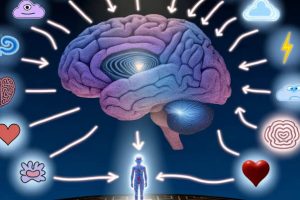
Demasio’s Emotional Decision Making – Antonio Damasio’s theory of emotional decision-making significantly advances our understanding of the interplay between emotions and rational thought in the decision-making process. Central to Damasio’s work is the “somatic marker hypothesis,” which posits that emotions and feelings, generated by bodily states, are crucial in guiding […]
James-Lange Theory of Emotion explained in 300 words
The James-Lange Theory of Emotion, proposed independently by psychologist William James and physiologist Carl Lange in the late 19th century, marks a foundational shift in understanding emotions. This theory posits that emotions result from our perceptions of bodily reactions to stimuli, rather than being the cause of those reactions. In […]
Ekman’s Universal Emotions theory explained in 300 words
Paul Ekman’s theory of universal emotions is a seminal contribution to the field of psychology, proposing that certain emotions are universal to all humans, transcending cultural and geographical boundaries. Based on his research in the 1960s and 1970s, which included studies of the Fore people in Papua New Guinea, Ekman […]
Neuroplasticity theory explained in 300 words
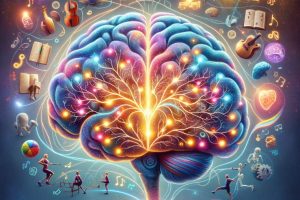
Neuroplasticity, a fundamental concept in neuroscience and psychology, refers to the brain’s ability to change and adapt as a result of experience. This includes changes in neural connections and pathways that occur in response to new information, sensory stimulation, development, damage, or dysfunction. The concept of neuroplasticity overturns the long-held […]
Kohlberg’s Moral Stages explained in 300 words
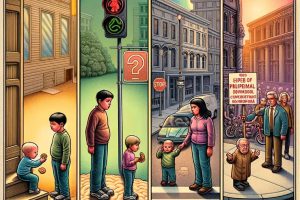
Lawrence Kohlberg’s theory of moral development is a framework that explains the progression of moral reasoning through six developmental stages, grouped into three levels: pre-conventional, conventional, and post-conventional. Kohlberg built on the work of Jean Piaget and used moral dilemmas, such as the famous “Heinz dilemma,” to study how people […]
Harlow’s Monkey theory explained in 300 words
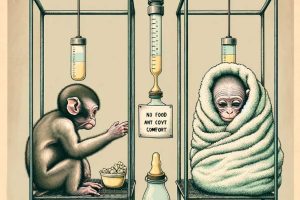
Harry Harlow’s monkey experiments, conducted in the 1950s and 1960s, are among the most famous and influential studies in the field of developmental psychology. These experiments explored the importance of caregiving and companionship in social and cognitive development. Harlow’s research focused on rhesus monkeys, specifically examining the effects of maternal […]
Birth Order theory explained in 300 words
The theory of birth order, popularized by psychologists such as Alfred Adler in the early 20th century, suggests that the order in which a child is born within a family can significantly influence their personality, behavior, and even intelligence. This Birth Order theory posits that siblings develop different personality traits, […]